
Potasas del Llobregat (Barcelona) – Geomechanical study in the experimental drift, design of the mine access decline and monitoring system.
Client | |
Location | |
Period | |
Partners | |
Service |
Project objective
The mine named “Potasas del Llobregat” is located in Spain, in the Catalonia Region, approximately 85 km NW of Barcelona.
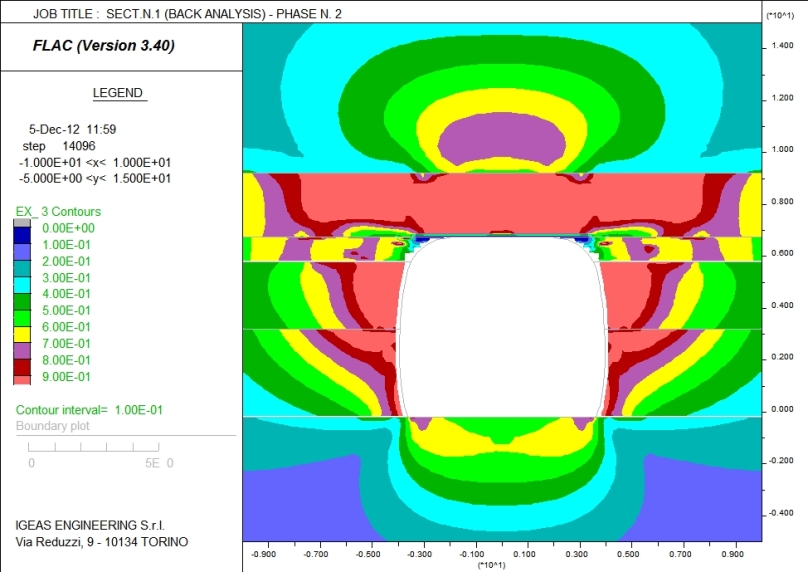
The stratigraphic setting of the area includes a series of salt layers over 200 m thick, characterised by a pronounced viscous behaviour, which causes a time-dependent irreversible deformation process and, consequently, significant tunnel stability issues.
The objective of the geomechanical study, for which our Company provided specialist consultancy, was to investigate in depth the rock behaviour in order to subsequently assess the feasibility of safely excavating a “decline” tunnel (ramp), which would allow material to be extracted by conveyor belts with higher productivity and lower costs.
Main works
Experimental gallery
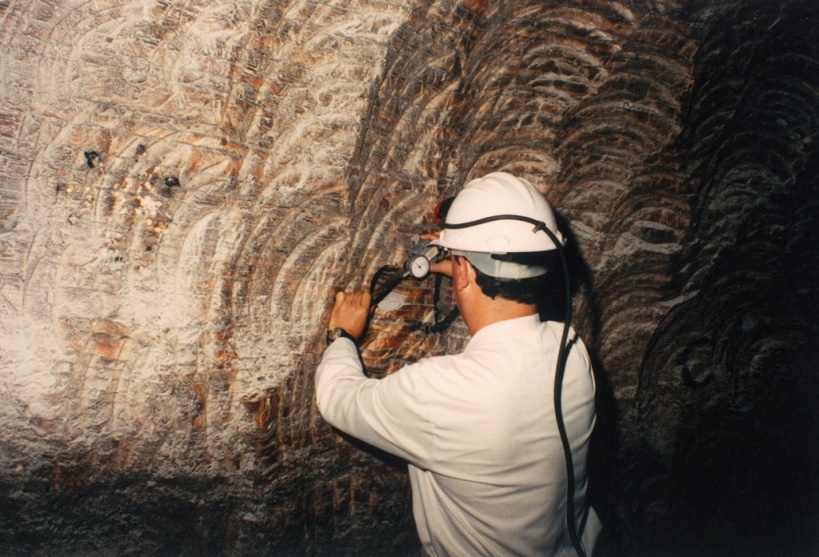
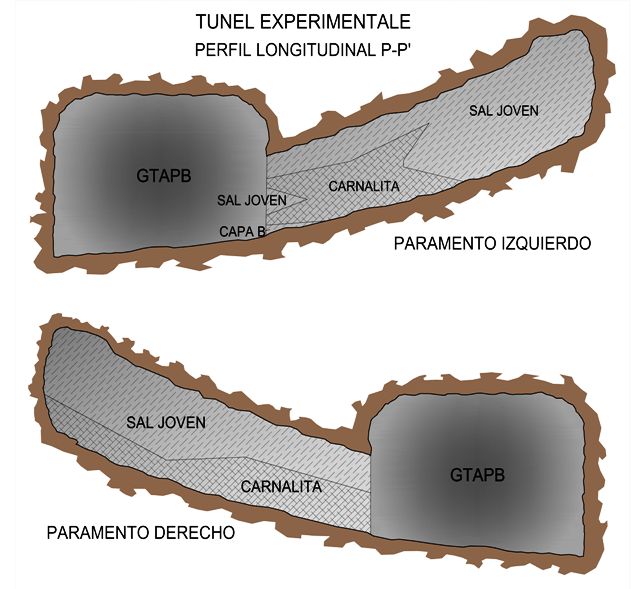
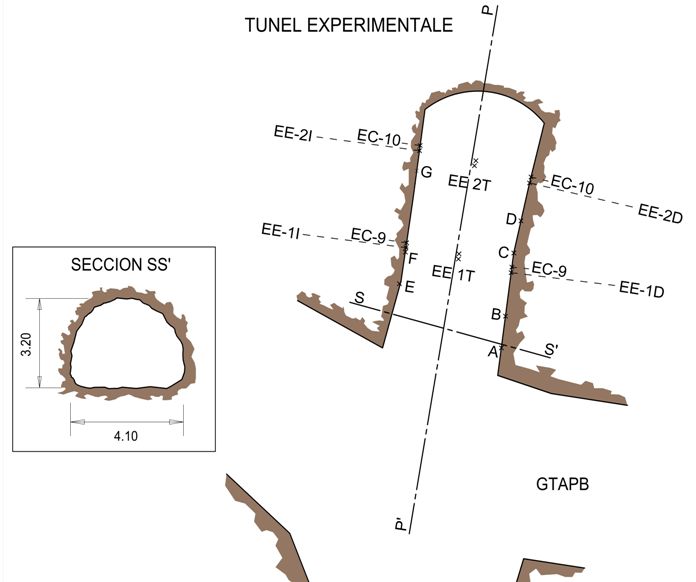
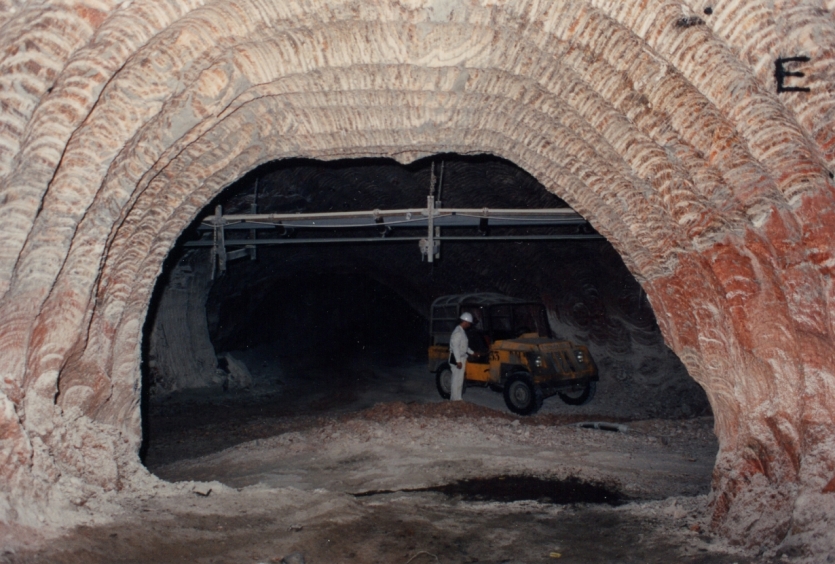
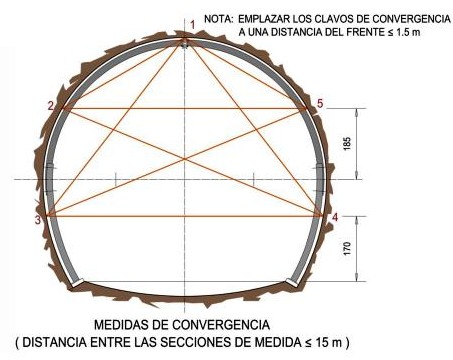
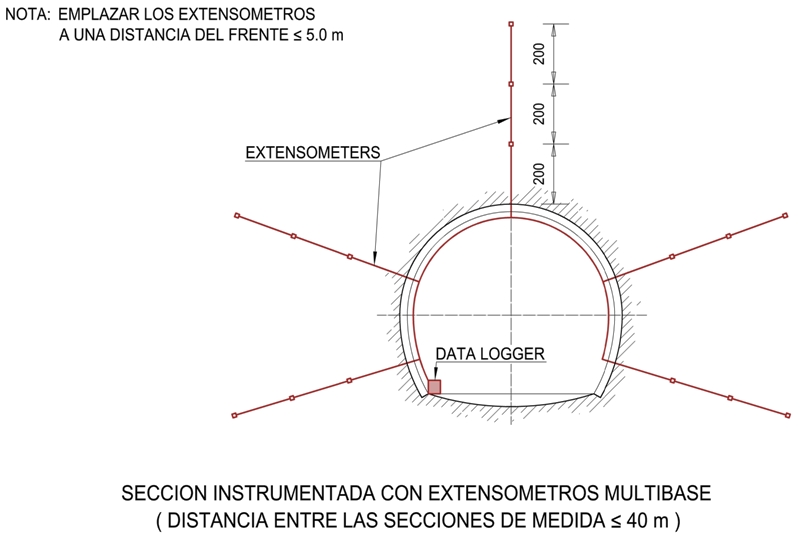
In addition to geognostic boreholes and laboratory characterisation tests, for geomechanical characterisation of the involved rock mass a short experimental gallery section was excavated in a mine area close to the future ramp: some sections were instrumented with two-point extensometers; accurate convergence measurements and borehole decompression tests were carried out.
Access ramp
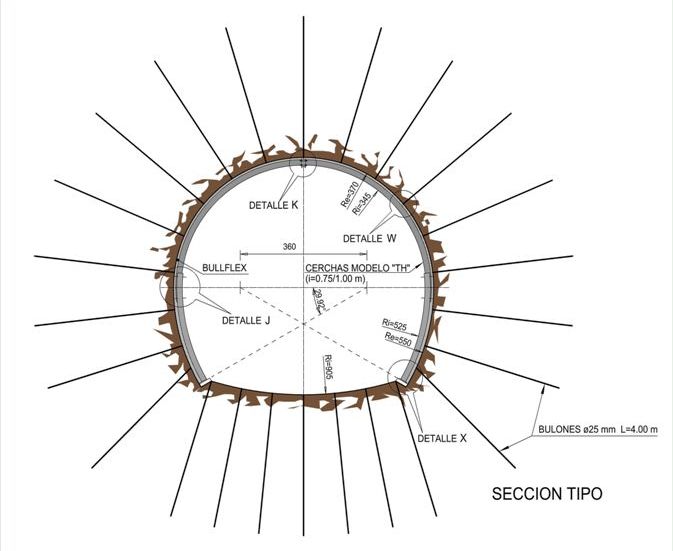
Given the geomechanical conditions, specific support and consolidation methods were required: the intervention section provided for the use of steel ribs combined, in some reaches, with a system of radial grouted rock bolts using a plastic-type grout mix.
Monitoring system
A monitoring system was designed for long-term control of tunnel stability and of the evolution of the stress state in the support structures (profile convergence measurements, boundary deformation measurements, bolt load measurements, measurements of stresses induced in the support structures, geological and geomechanical mapping during excavation).
Previous

Next
